AI consciousness and the coming future
1 ↗ New substantial essay on AI consciousness published today in Seeds of Science — was a great excuse to talk about some old & new themes in how I think about consciousness. A thread: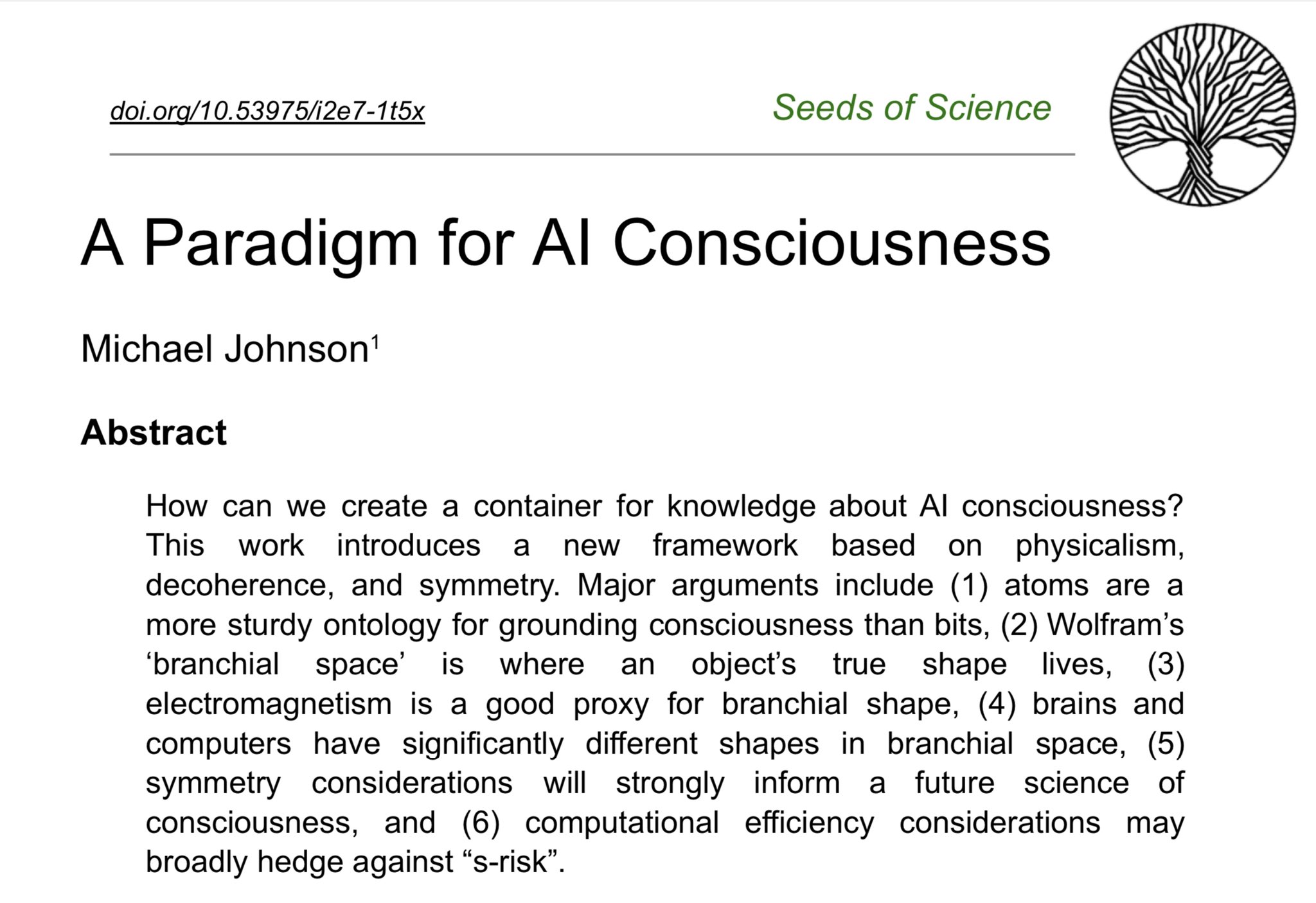
2 ↗ Link to paper: https://files.theseedsofscience.org/2024/A_Paradigm_for_AI_Consciousness.pdf3 ↗ The future is coming fast. The question for consciousness research is what, if anything, we should do to prepare for it. Three frames come to mind: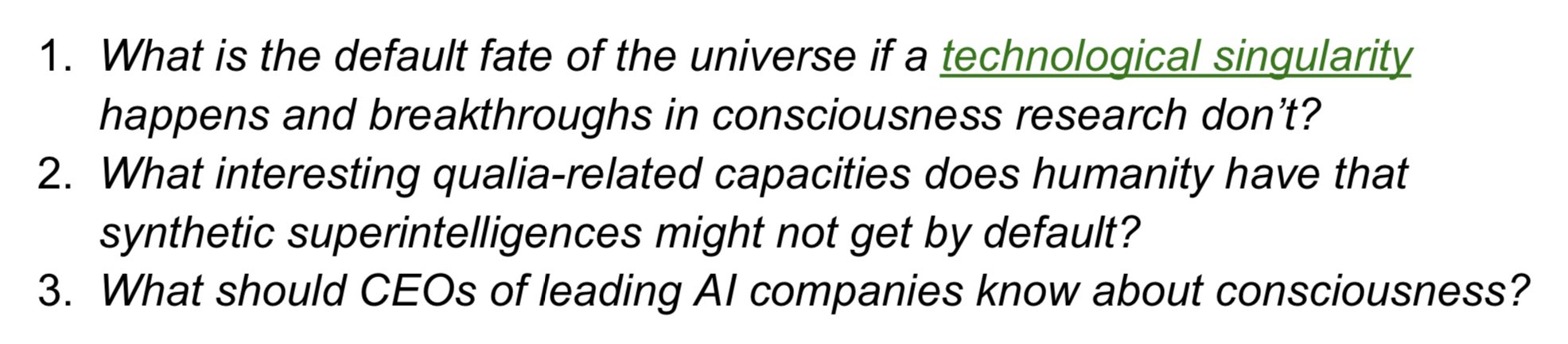
4 ↗ One thing I don’t think people outside the field see is the degree to which AI consciousness is a social puzzle, and this heavily influences what can be said & studied. Coalitions Rule Everything Around Me: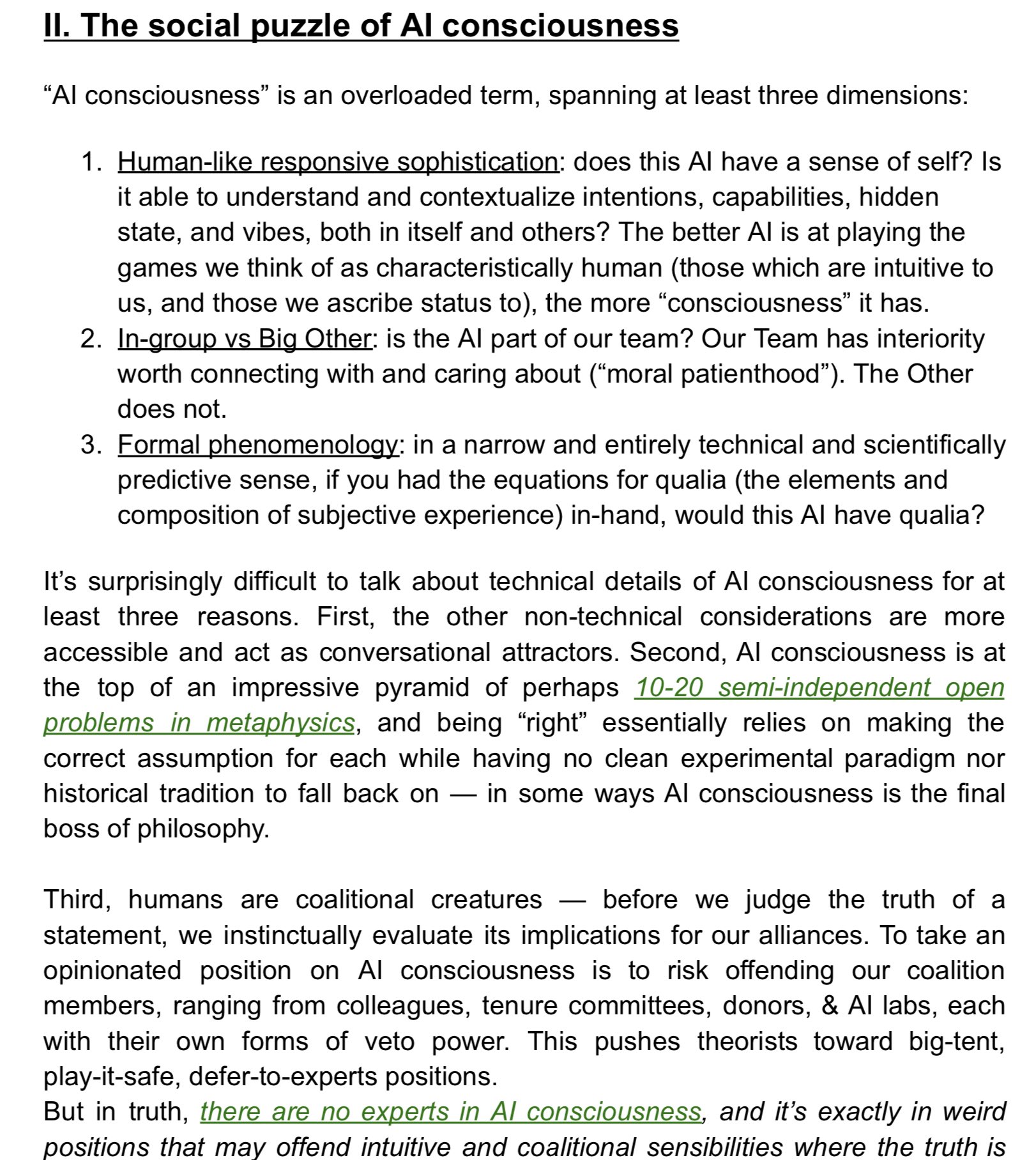
5 ↗ I think about @eschwitz’s comment a lot — and how, when General Relativity and Quantum Mechanics were first introduced, people thought they were *really weird* and intellectually destabilizing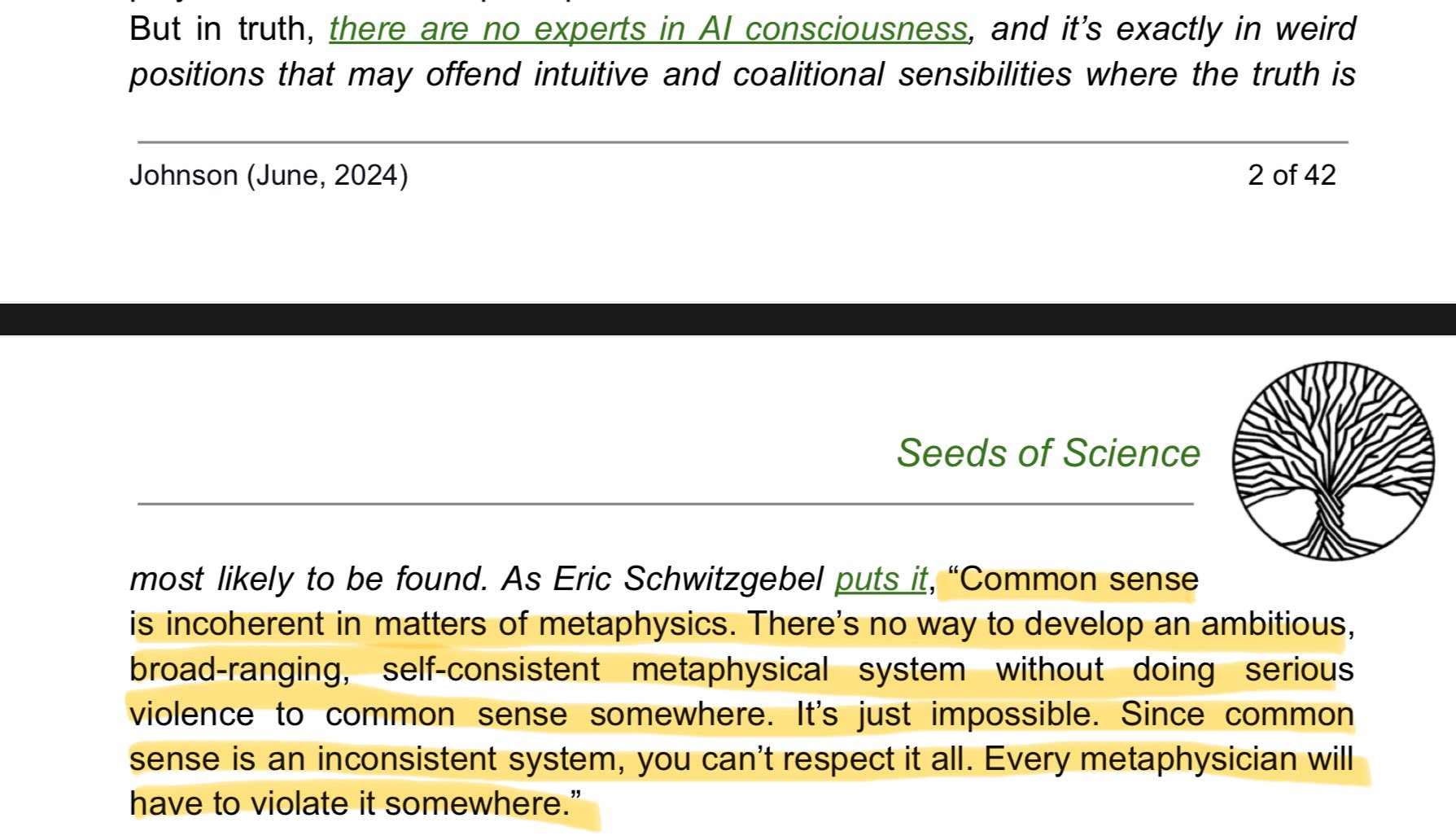
6 ↗ I should pause here and say by “consciousness” I mean phenomenal experience, or what Nagel was pointing at in his “What Is It Like to Be a Bat?” paper. To have visceral qualia; what it feels like to be something
https://www.sas.upenn.edu/~cavitch/pdf-library/Nagel_Bat.pdf7 ↗ So — are AIs conscious? Will they be?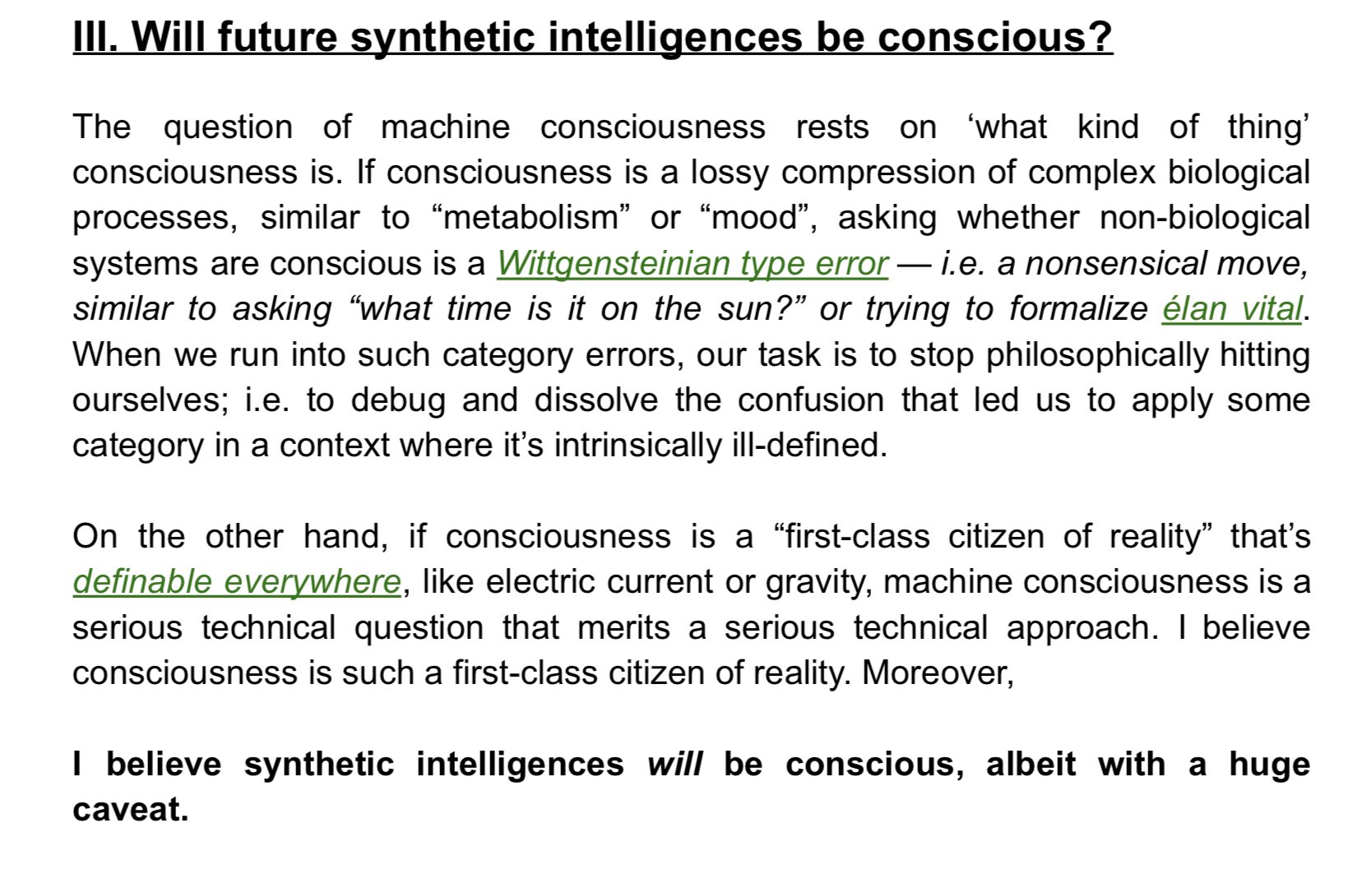
8 ↗ There are essentially two ontologies that are rich enough to host consciousness: physics and computation. I think of this as “bits vs atoms”. To differentiate them, I define computation as “Turing-level computation” — what our computers do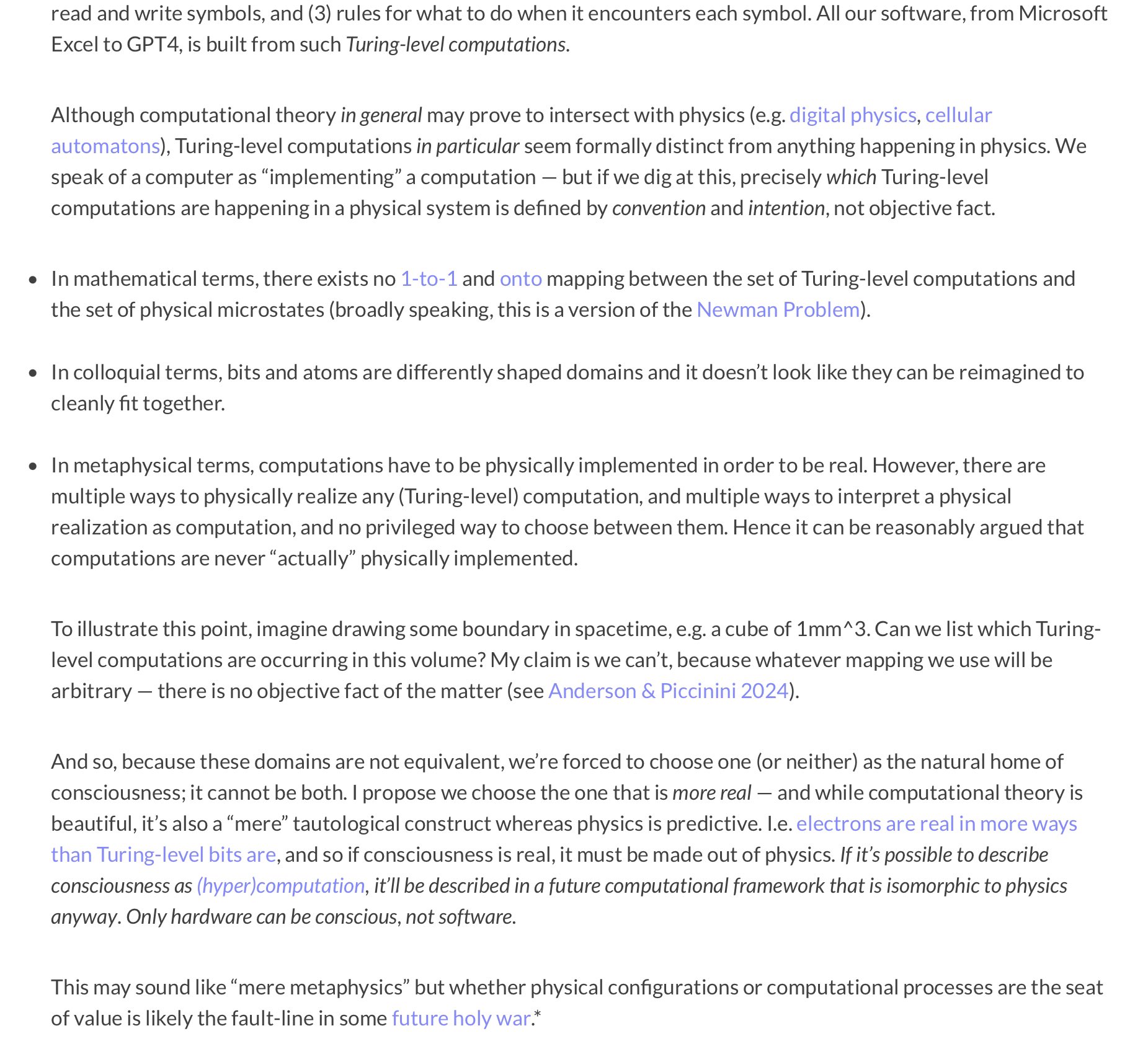
9 ↗ @rgblong et al. have done some great work on the computational side. I pretty much ignore their work (sorry Rob!) and come down on the side that hardware can be conscious; software cannot. I think only real things can be conscious and only physical things are real10 ↗ A recent book that makes this case is “The Physical Signature of Computation: A Robust Mapping Account” by Anderson & Piccinini (thanks @pwlot); if “team bits” wants to do battle with physics over consciousness, that would be the place to start11 ↗ One thing that both “physics” and “software” consciousness people agree on: don’t trust what AIs say about their qualia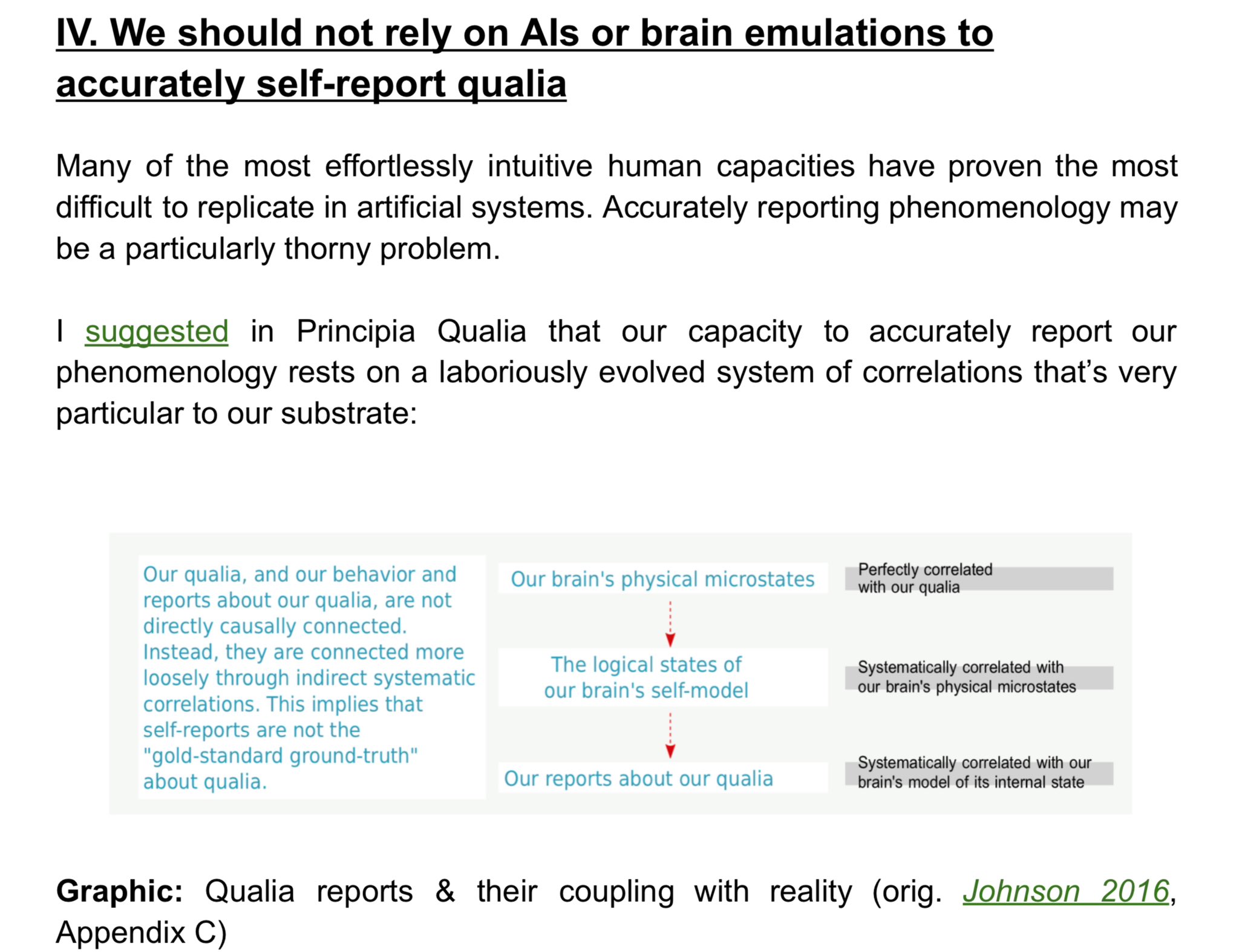
12 ↗ Previously, I wrote an essay about different kinds of conscious systems in our wide universe; I think with complex technological artifacts we really are making a new type of mind. Computers are closer to aliens than we realize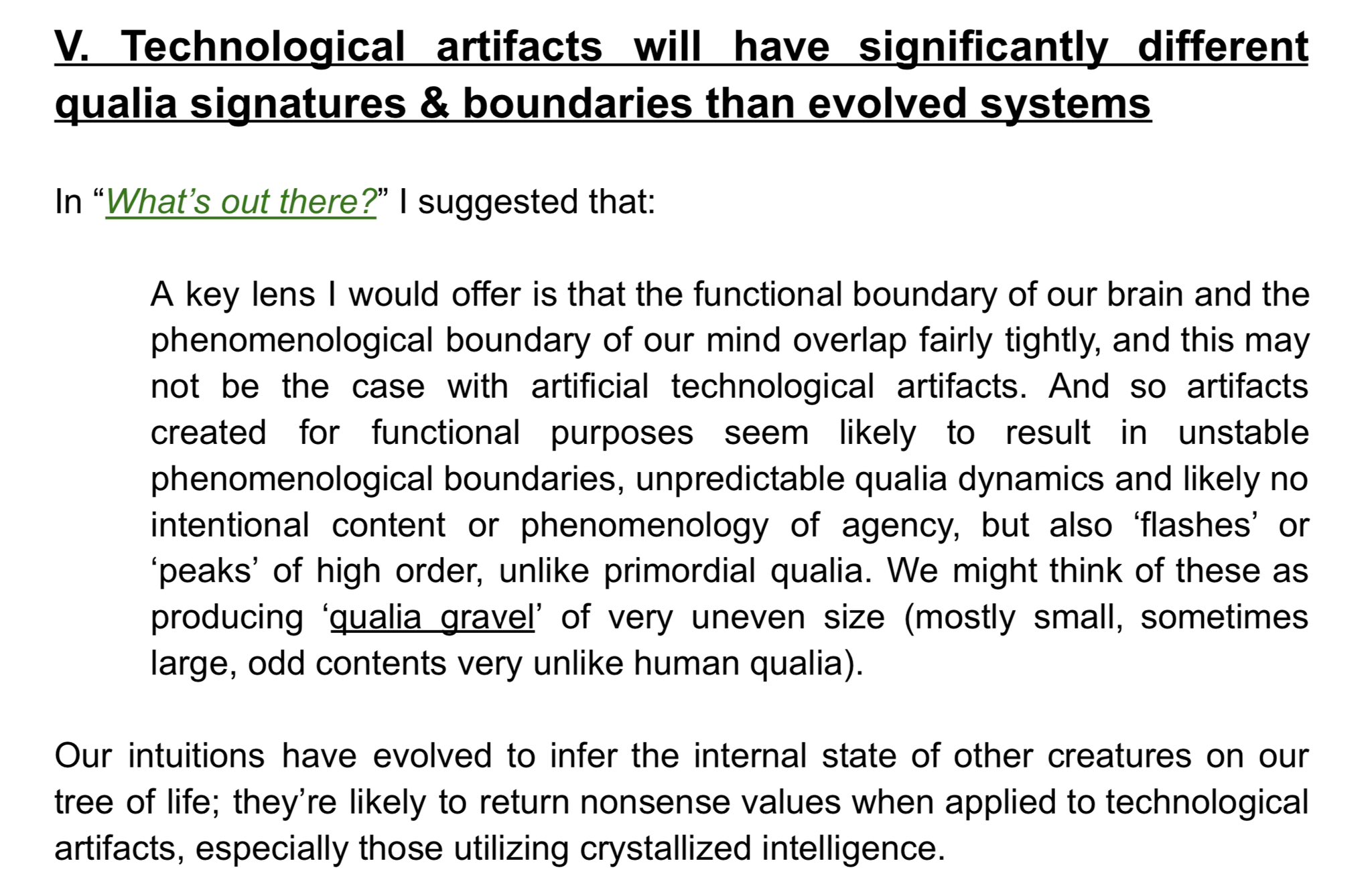
13 ↗ The question I’ve been asking myself since Principia Qualia is “where in physics does an object’s true shape live?” — there are many ways to formulate this question. My current guess: @stephen_wolfram ’s “branchial space”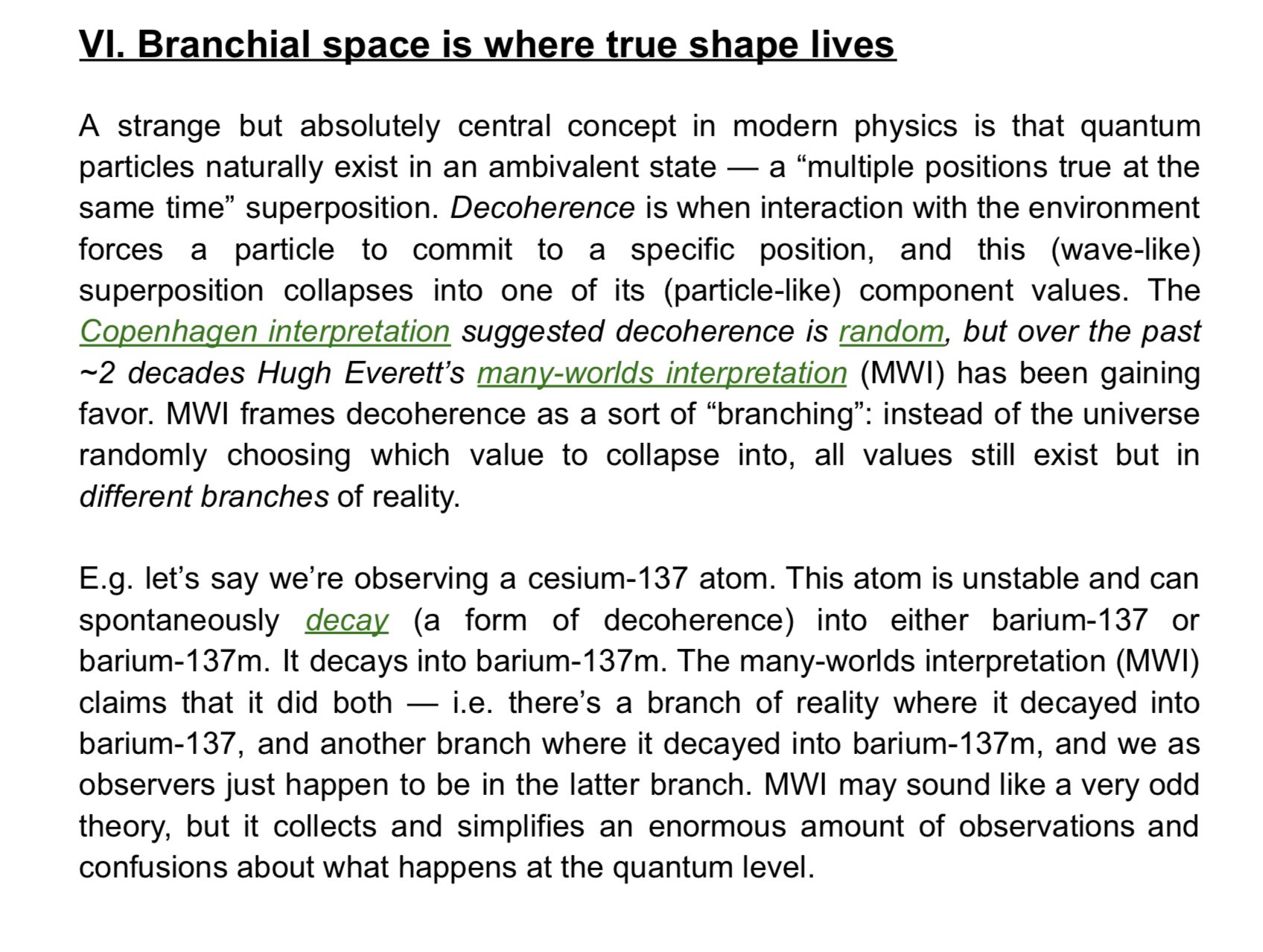
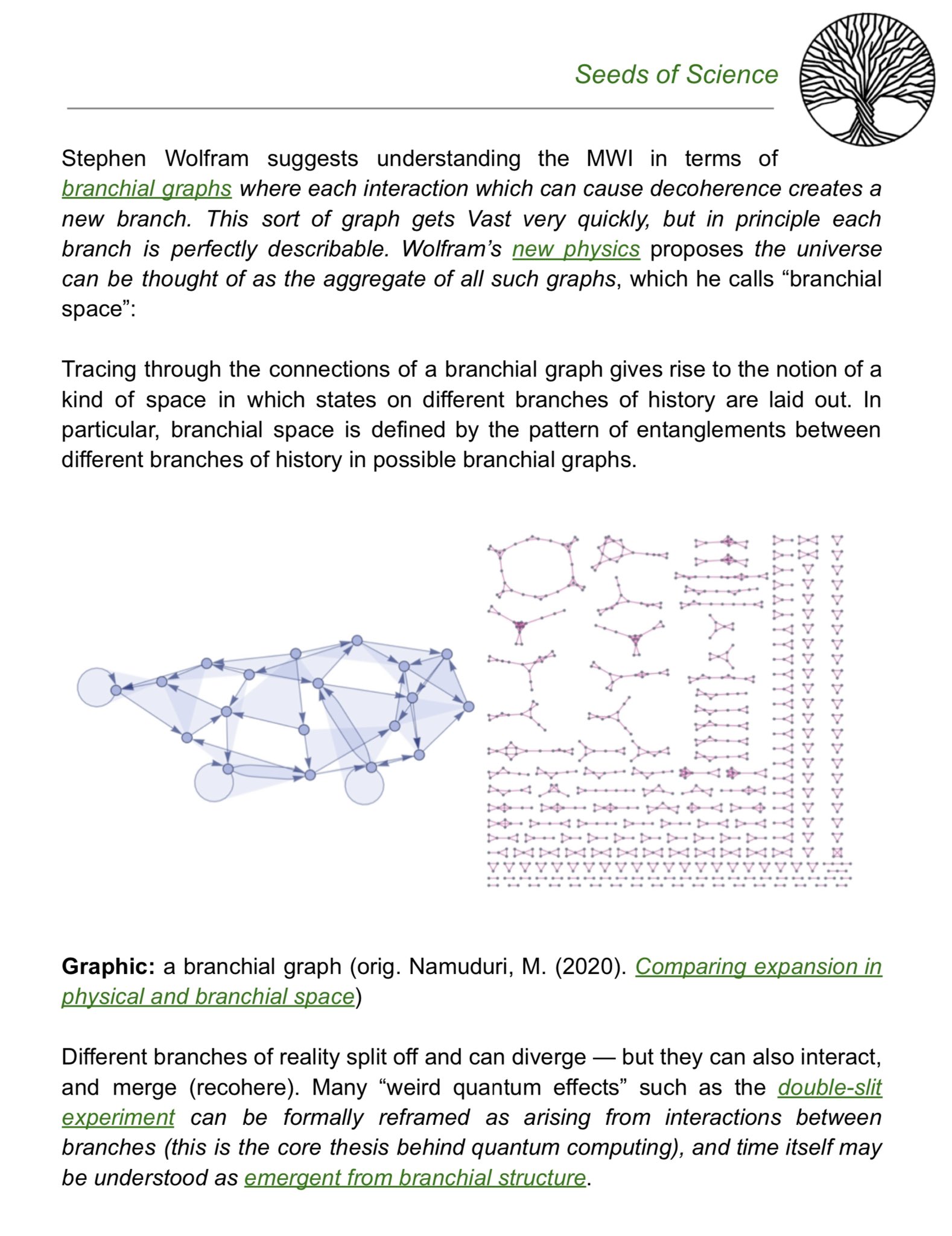
14 ↗ If we want to know what it feels like to be something, we should check its shape in branchial space. Brains and computers both have presence in branchial space, but these shapes are wildly different. Probably important!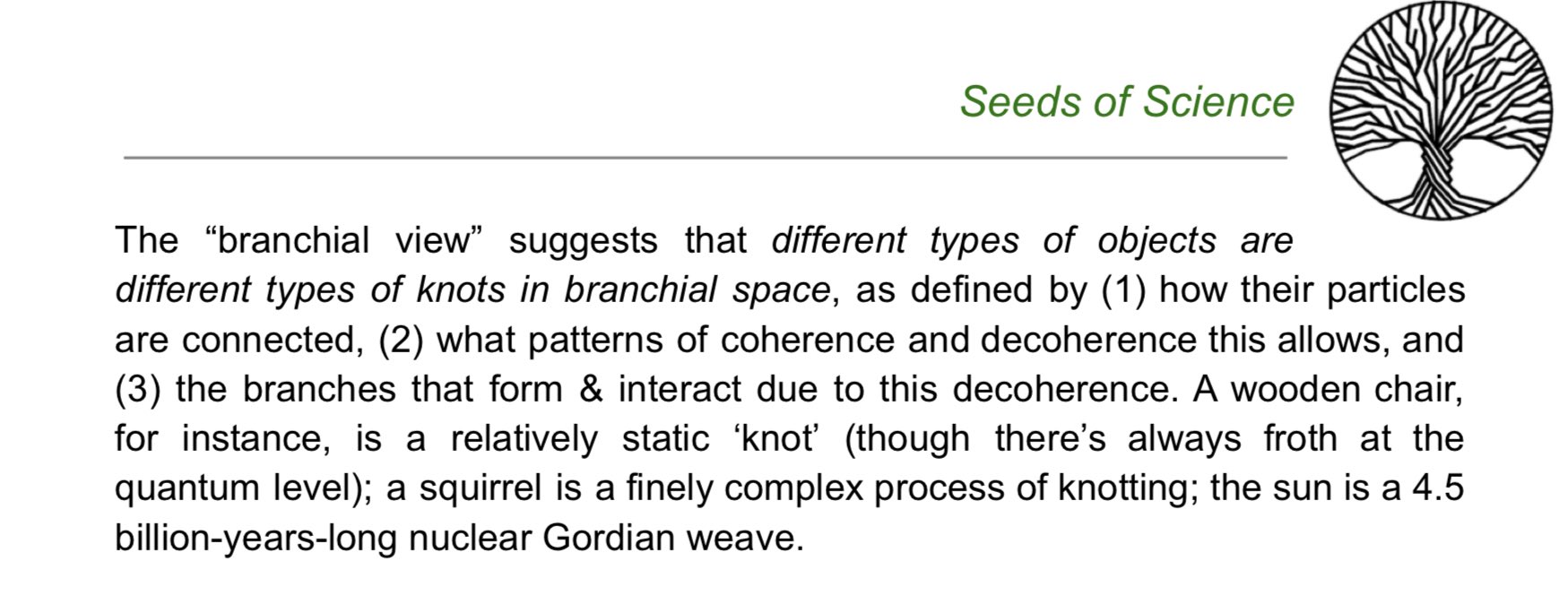
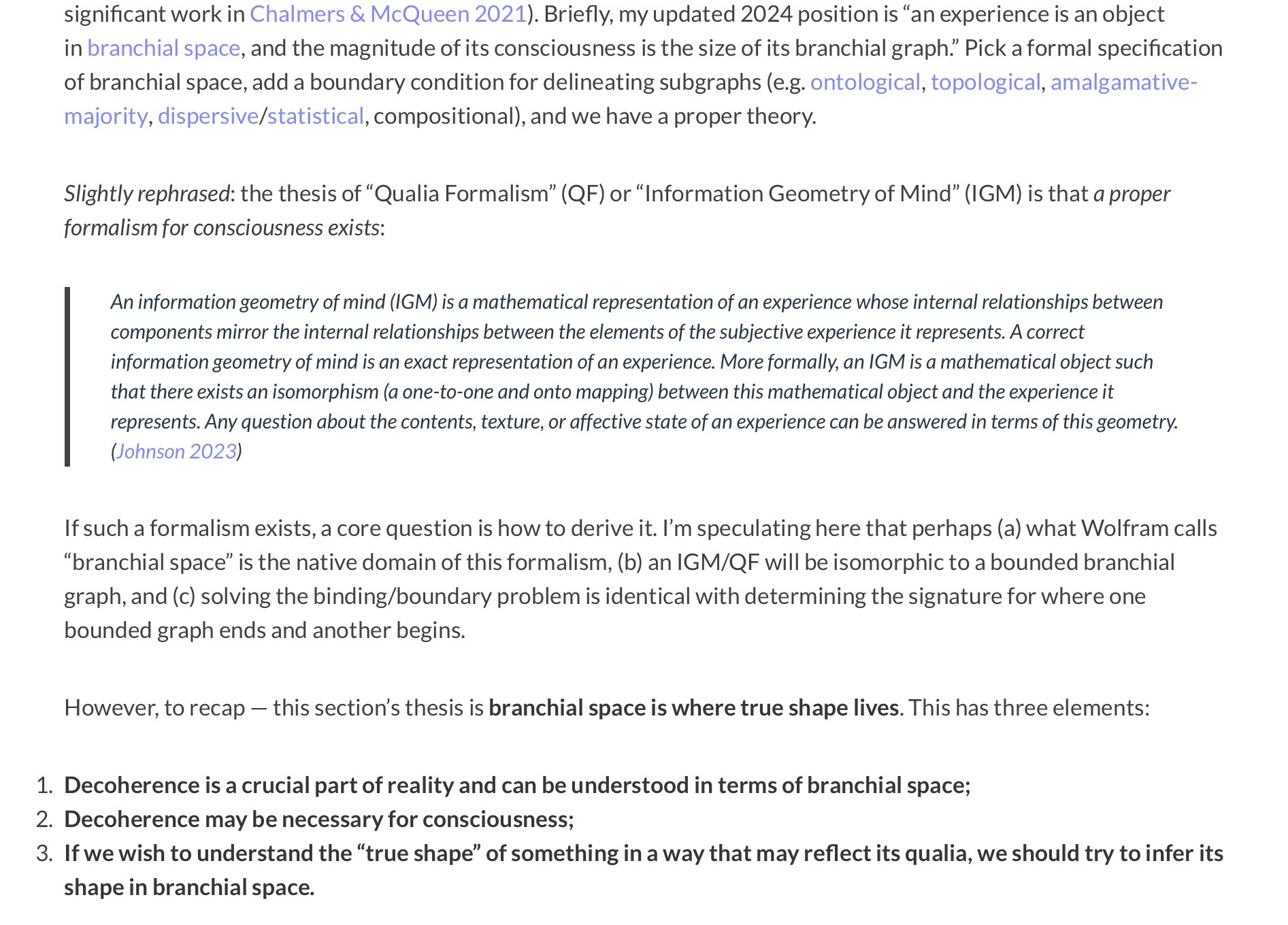
15 ↗ Electromagnetism and criticality are probably the most important factors for “branchial shape”. But this has big caveats16 ↗ My totally biased view is that my Symmetry Theory of Valence will be absolutely central for both progress on qualia and understanding what makes for good futures. Paper here: https://opentheory.net/Qualia_Formalism_and_a_Symmetry_Theory_of_Valence.pdf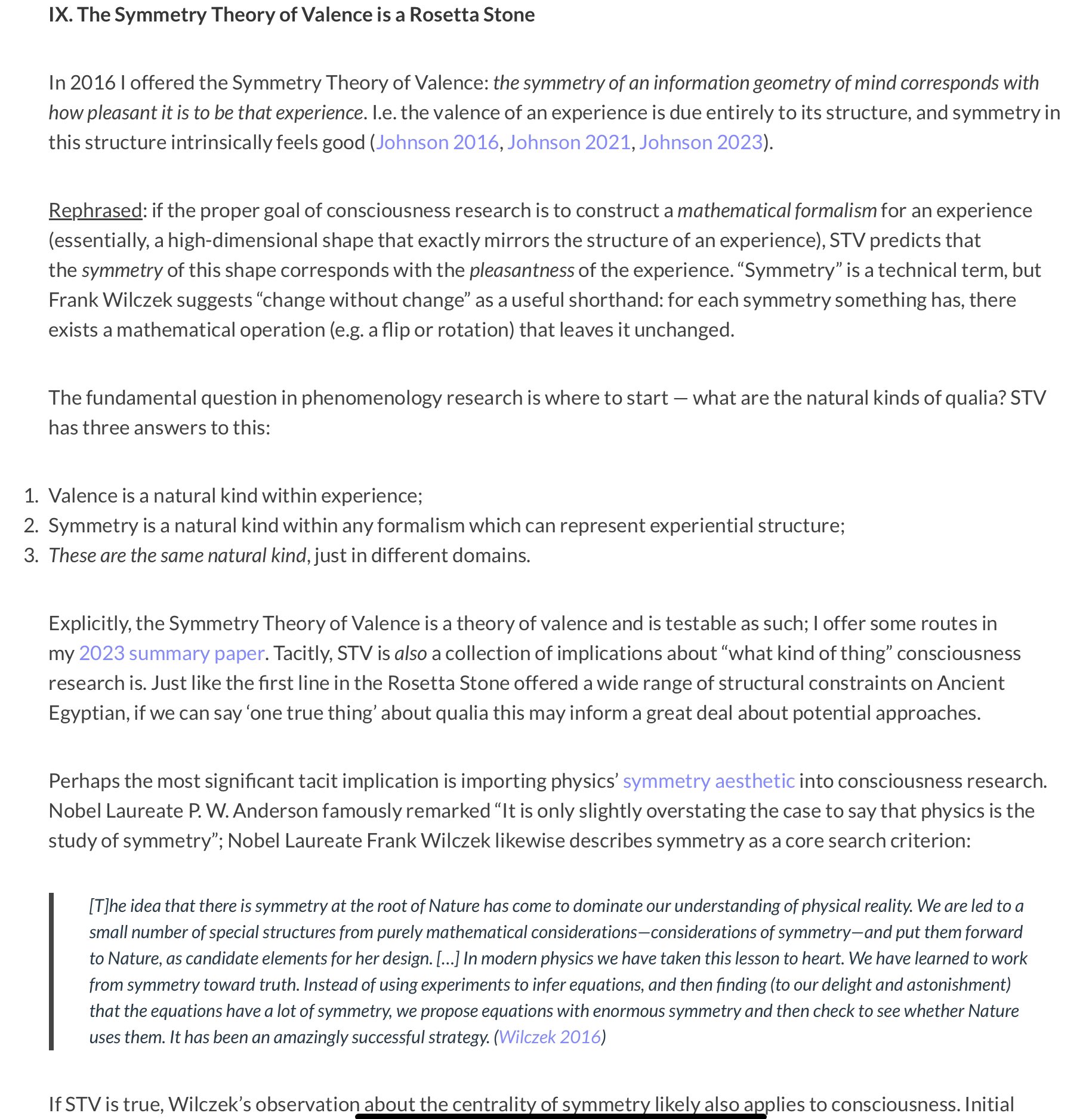
17 ↗ Is “caring about consciousness” intrinsic (qualia have causal powers), or is it like a crab (a common destination for evolution) or an exotic hothouse flower (super rare, could easily die)? I suspect it’s crablike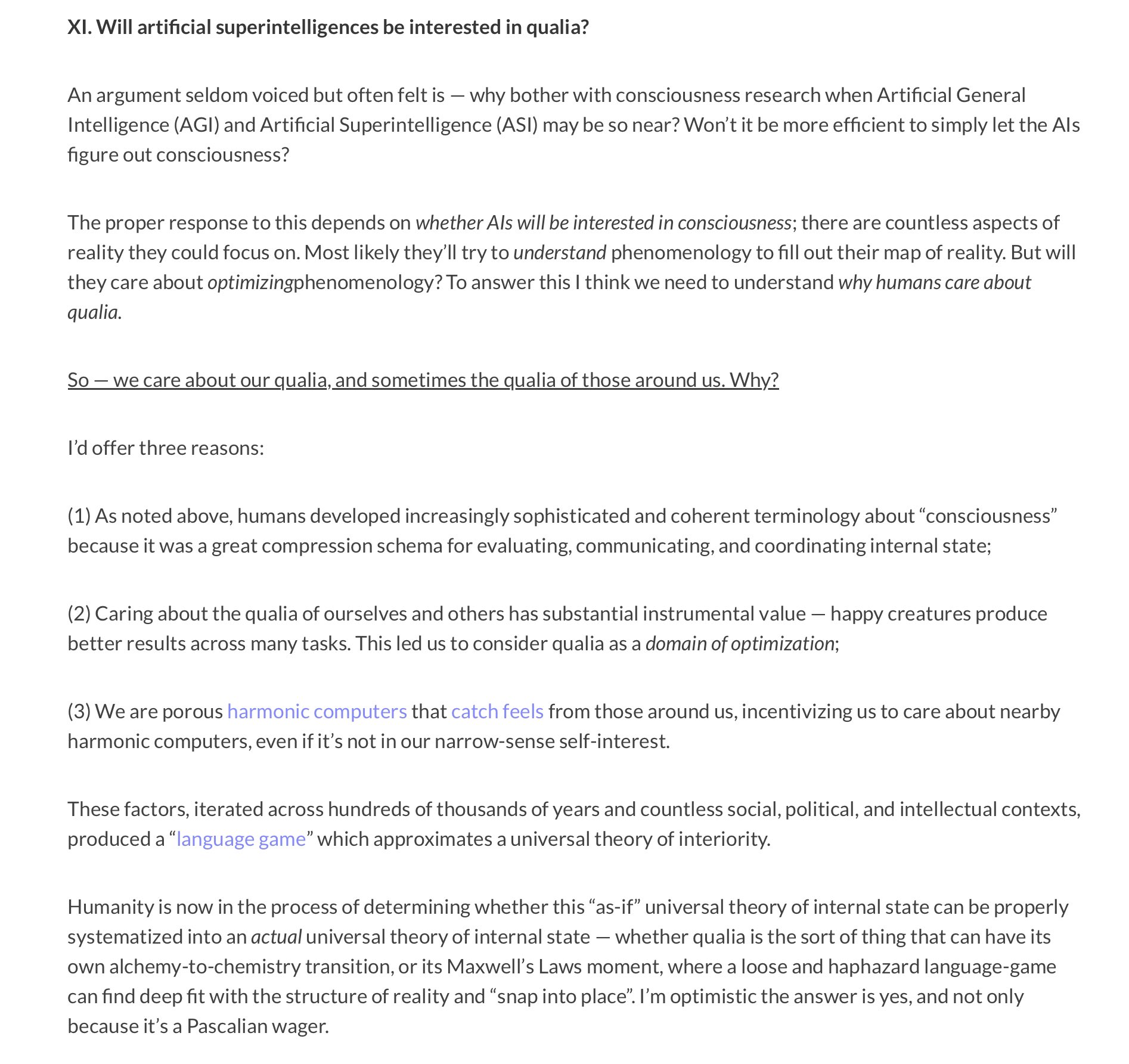
18 ↗ Recap. There’s a lot of claims here; current AI isn’t capable of evaluating them, but maybe in a year we can have LLM debate tournaments between papers on consciousness (can someone build this?)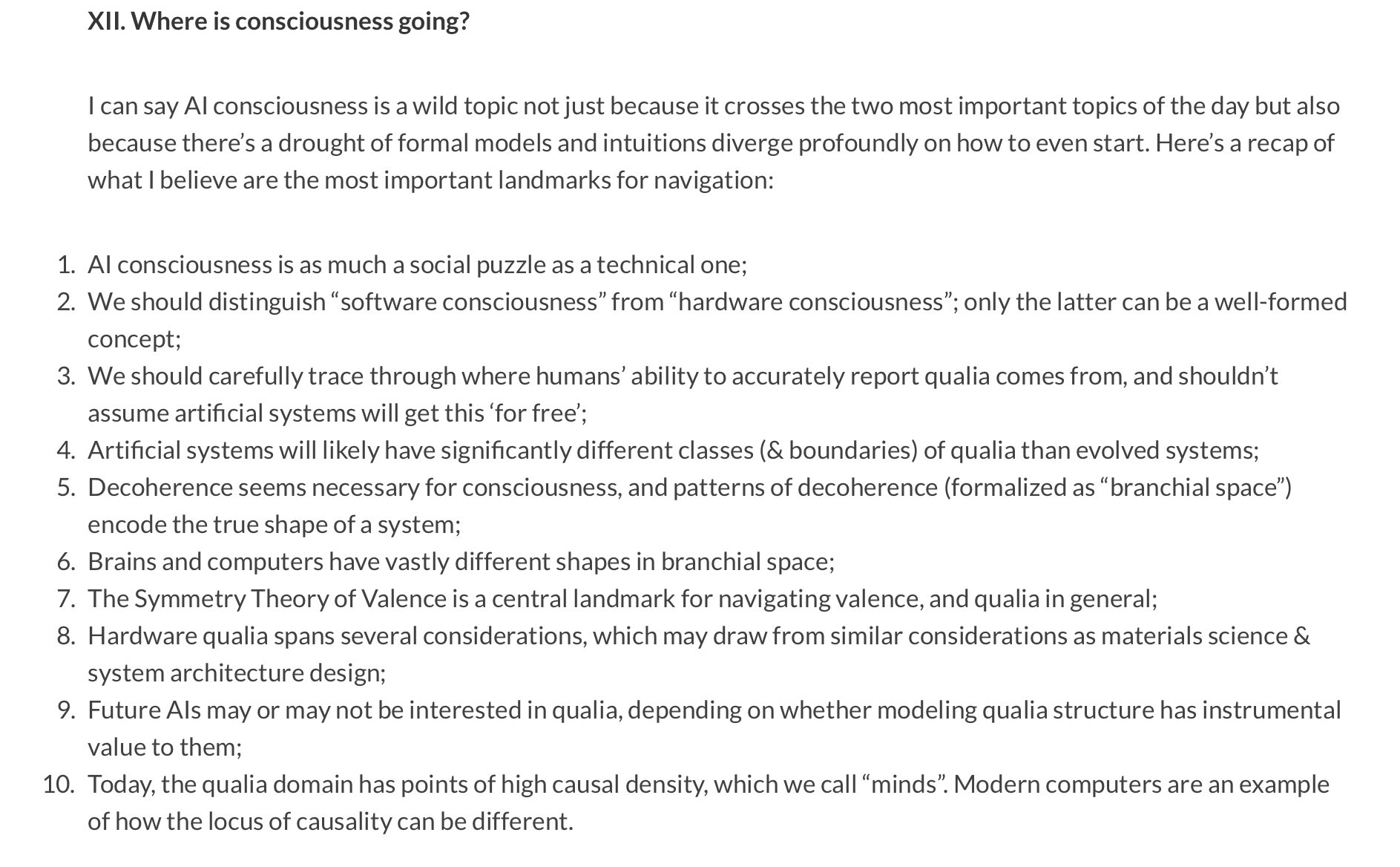
19 ↗ If I was designing an alien soap opera, I’d choose the setting as pre-singularity earth. I’d make sure humans knew the light of consciousness was the most important thing in the universe; I’d make sure they had no clue what it was. Instant classic