Sensation, language, and foom
1 ↗ In the beginning there was sensation
Humans developed the ability to freeze sensations, then used these frozen pieces to construct a grammar for thought (vasocomputation)
This led to words, magical spells that can conjure sensations in both caster and target
This led to foom2 ↗ If a dolphin wants to explain there’s a school of fish nearby, it will send the sound of a sonar return from a phantom school of fish — literally the *sensation* of fish. I suspect this is a good model for early human language — “magic spells that involuntarily invoke sensations”3 ↗ Sensation magic led to great cooperation, and also adversarial sensation magic which fooled and controlled. Dark magicians (wordcels) arose and culled the literal and the boundaryless
If you’ve seen The Invention of Lying (2009) it was probably like that except somewhat darker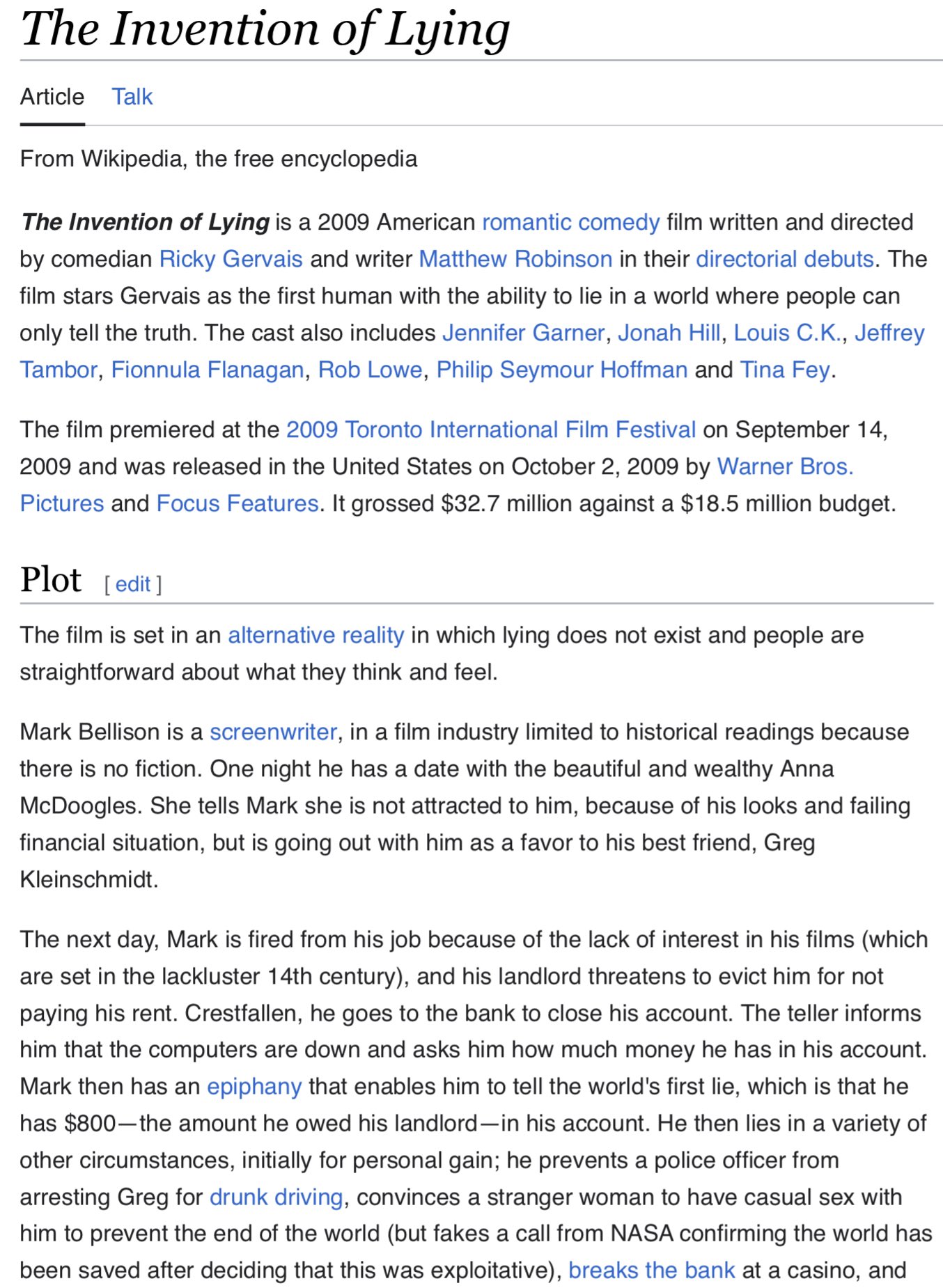
4 ↗ A lot of weird quirks about language and about humans are due to the fact that (1) language opens you up to lots of different mind-control attacks, but (2) you can’t opt-out of language. It’s just too important for connection and function
-> A rich ecosystem of move-countermove5 ↗ The pinnacle defended-by-default is what we call the “normie”. An impressive set of solutions for hardening nervous systems against adversarial sensation magic — e.g. mental partitions, type safety on words, selective de-referencing. A tough nut to crack6 ↗ But the normie’s defenses make him less agile at addressing novel attacks — and the wordcel never sleeps. Because normies don’t feel the full force of words, they’re especially vulnerable to side-loading7 ↗ Wittgenstein has always been my favorite philosopher but it took me a long time to understand his work as a unified moral project — BOTH his early and later works are about preventing predation of normies by wordcels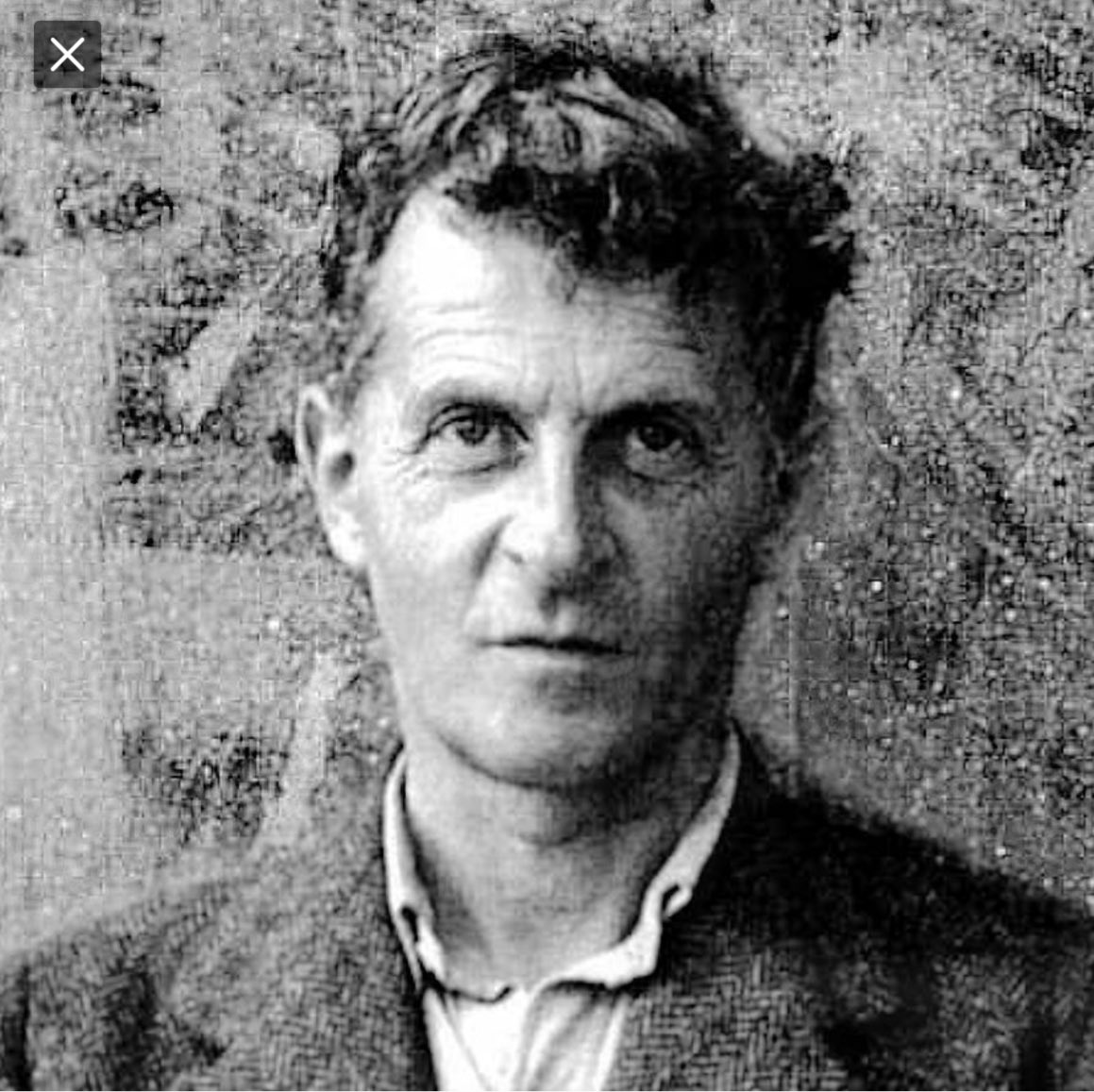
8 ↗ Over time, there’s selection pressure on individual words to naturally de-reference and refer to the pointer, not the sensation. This leads to novel capacities, novel superorganisms that these capacities allow, and novel forms of predation from these superorganisms9 ↗ The dynamic I think tpot clued in on is that the modal egregore is actually pretty hostile to human flourishing and benefits when the mind-body connection is broken10 ↗ I really love people who take ideas seriously. I also think eigen’s approach is hilarious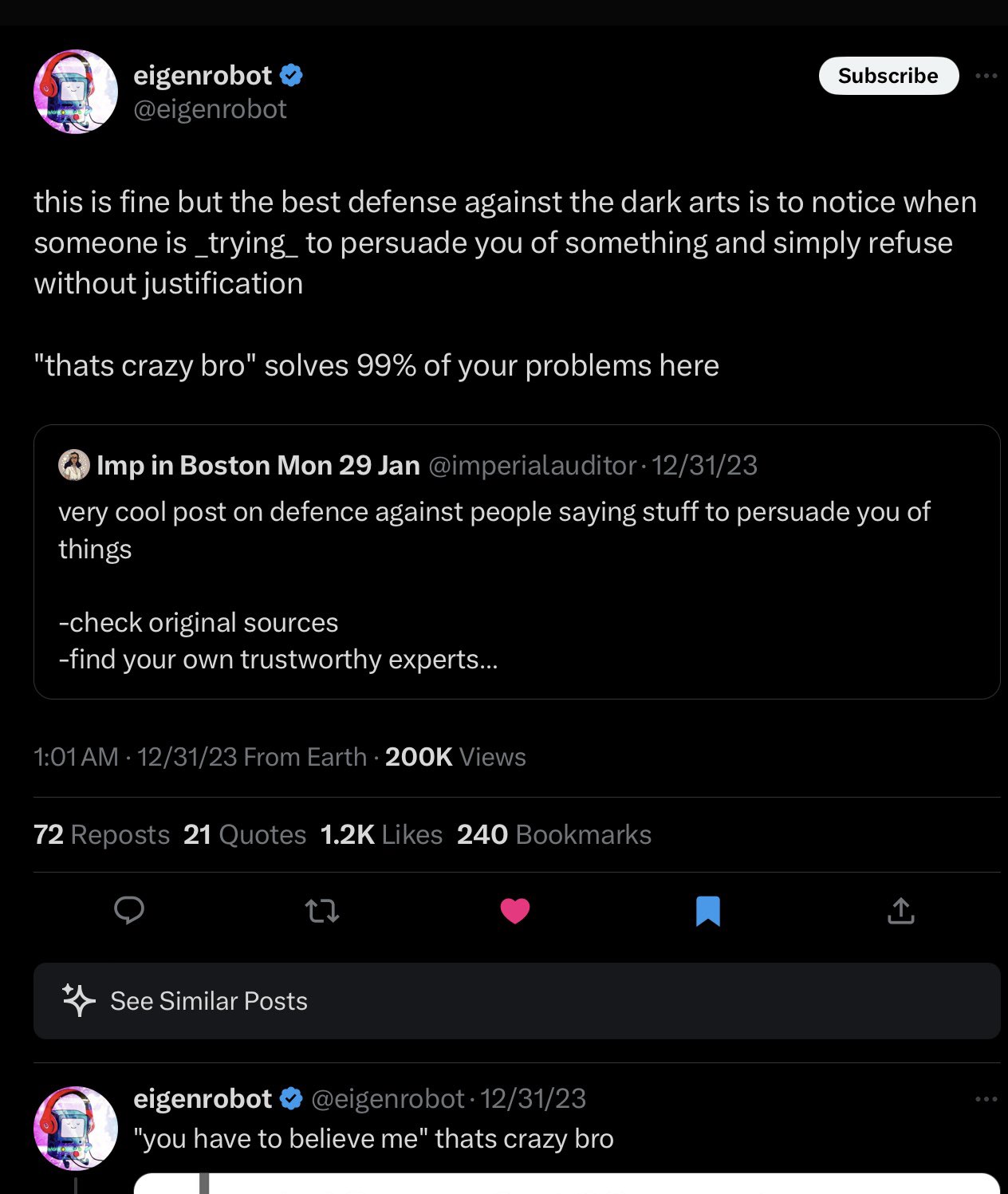

11 ↗ Anyway, thanks for coming to my TED talk. Thread inspired by @nosilverv12 ↗ To circle back to the beginning — here’s the system I believe we use to freeze sensations: https://opentheory.net/2023/07/principles-of-vasocomputation-a-unification-of-buddhist-phenomenology-active-inference-and-physical-reflex-part-i/13 ↗ It’s also interesting to consider reification as a sensory superstimulus — much like “a single doritos nacho chip contained more flavor than a 17th century feudal peasant would have experienced in an entire lifetime,” a frozen distillation can be more compelling than the reality